Showing posts with label congress. Show all posts

Tuesday, January 31, 2012

Few thoughts on Election Reform


The last several elections have focused on "change". The people are unhappy with their leaders. Congress currently has about a 10% approval rating. Many have concentrated on trying to get better candidates elected into office. The hope being that these politicians will reform the system and make it better. However, the fact that polls show (page 19) that about 1/5th of voters would support a candidate, even if that candidate was not a Democrat or Republican, demonstrates that there is a significant percentage of Americans that are unhappy with both of the two major parties. According to other polls, a full 40% of voters do not view themselves as members of either major party. If nearly half of voters do not associate with one of the two major parties, why are there no 3rd parties rising to prominence? Many believe this problem comes from the nature of the way we vote.

I think the US needs to have a discussion about reforming our elections in order to provide a more representative govt and avoid having half of the population feeling disaffected by the two parties (not to mention those that don't even vote due to feeling that their vote doesn't matter). So in this article I talk about some of those approaches.

Monday, January 09, 2012

How Ron Paul should respond to accusations about his record


In the debates over the weekend, Rick Santorum accused Ron Paul of being "on the margins". Santorum implies that Paul would be an ineffectual President stating (paraphrased) "Out of over 600 bills, you've only had 4 come up for a vote and only 1 that has passed."

I guess in Santorum's worldview, since the same Congress that has continually concentrated control in Washington over the decades doesn't want to hear measures that would relinquish that power, Paul isn't doing things right. Here's how I'd love to hear Ron Paul respond:

Wait a minute, are you saying that because we have a Congress that has passed such bills as the National Defense Authorization Act, the bailouts and stimulus, and Obamacare, a Congress that will stuff multiple unrelated measures into a single bill that gets both sides something they want and a plausible excuse to give their base as to why they voted for it, a Congress that will use trickery, loopholes, and bribes to pass unpopular bills (and then congratulates themselves on legislative creativity), a Congress that frequently does not read the bills they are voting on, a Congress that throws taxpayers money around at endeavors like a bridge to nowhere (that my opponent here voted for), ethanol subsidies, and Solyndra, a Congress that continues to raise the debt ceiling while it has not had a balanced budget in virtually my entire tenure and hasn't passed a budget at all in the last 3 years, a Congress that cozies up to special interests and lobbyists and who often outsources the writing of complex bills to corporate insiders, a Congress with an 8% approval rating, because *that* Congress refuses to even debate my bills, are you saying that reflects negatively on me?

[optional]

I'm more concerned with finding common areas of agreement and forming coalitions for freedom. I've been accused by my opponents of working with Democrats and leftists like Barney Frank, Bernie Sanders, and Dennis Kucinich - and this is true. But because I can agree with Frank on the need to get the federal govt out of trying to restrict medical marijuana doesn't mean I agree with him on his banking regulations. Because I can find common ground with Sanders regarding the Federal Reserve, doesn't mean I agree with him on his economic views. Because I can work with Kucinich to try to change our interventionist foreign policy doesn't mean I agree with his views on govt funded health care. Working with people with whom you disagree 95% of the time to get things in that 5% accomplished doesn't make you a sellout, it's how you build coalitions to fight a battle for liberty without losing your principles.

[/optional]

No, this accusation reveals the mentality of Washington insiders: that "getting things done" is more important than what is actually done. That has to stop. 

Tuesday, March 23, 2010

Explain this

The Democrats who voted for the health care bill use the 'Interstate Commerce' clause as the authority for regulating health insurance.   How does that work considering that health insurance is already not allowed to be sold across state lines.  Therefore, by DEFINITION, health insurance is NOT interstate commerce.

Somebody please explain it to me.

Saturday, March 06, 2010

Under the cover of darkness

The Federal Trade Commission (FTC) has the responsibility to police the business world (in the name of "Protecting America's Consumers"). They have a great deal of power to regulate corporations. And their power to enforce of these regulations is even greater. At the very least, they can just drag the process out to the point of enormous expense and loss of business.


With such power, in our government, there are supposed to be checks and balances. Congress should have bipartisan discussions about the power the FTC and all sub-organization agencies have and specifically those in positions of power in those agencies. Instead, what often happens is wholesale bypassing of discussion/debate.


These appointments (and who knows how many others) get tossed in at the end of the day (~8pm) with about a dozen people in the room, many of which are probably clerks and staffers (see video - slider time; ~625:30).  No discussion of qualifications, biases, philosophy; just basically "Approve them all."

Mr. REID. Mr. President, I ask unanimous consent that the Senate proceed to consider Executive Calendar Nos. 603, 604, 610, 625, 629, 630, and 700 so that the nominees be confirmed en bloc, the motions to reconsider be laid upon the table en bloc; that no further motions be in order; and that any statements related to the nominations be printed in the Record; that the President be immediately notified of the Senate’s action, and the Senate then resume legislative session.
The PRESIDING OFFICER. Without objection, it is so ordered.


This is incredible. Now I'm not Congressional parliamentary procedure expert, so I may be reading this all wrong, but it seems that just  saying, "I'd like to pass this as long as nobody objects." when nobody else is in the room doesn't smack of a republic (or even a democracy). 


If you look at the description of the Senate Executive Calendar, you'll see that it does contain nominations: 


Nominations
This section identifies Presidential Nominations submitted to the Senate for confirmation, placed on the Executive Calendar with a sequentially assigned calendar number and ready for Senate floor consideration.

But that description doesn't seem to imply that they can just bypass consideration. So I take this to mean that these nominations are supposed to considered by both parties on the floor.  Apparently not.


Here's how I read these statements individually:
I ask unanimous consent that the Senate proceed to consider Executive Calendar Nos. 603, 604, 610, 625, 629, 630, and 700 
Ok, nothing major here. It seems this is just wanting to elevate these particular items to the floor for consideration [tomorrow?].  Then they will discuss each of them individually, right? 
so that the nominees be confirmed en bloc
Oh.  Well, at least they can't be confirmed with the Republican motions to reconsider (objections) blocking them.
the motions to reconsider be laid upon the table en bloc
huh? All of them?  Just like that? Well, as long as the the Republicans can resubmit their motions before confirmation...
that no further motions be in order
Wait, what? Now Republicans CAN'T submit motions to reconsider?
and that any statements related to the nominations be printed in the Record; that the President be immediately notified of the Senate’s action, 
Read: "Appropriate paperwork be done"
and the Senate then resume legislative session. 
"Just move along. Nothing to see here." Well surely nobody would allow this to just go by unchallenged.
The PRESIDING OFFICER. Without objection, it is so ordered.
Oh come on! 


I'm not only getting on the Democrats, I'm sure Republicans did the same blasted thing during their tenure. But that doesn't excuse the practice of what appears to be rubber stamp approving all the weasels while the farmer is asleep.


Almost makes one wonder if someone could just slip in there real quick right before adjourning when there are like 2 clerks and a transcriptionist and say, "I ask unanimous consent that the Senate proceed to consider Executive Calendar number 777 to direct all tax dollars to this offshore account; that a small island be granted to me; that all motions in objection be tabled; that no further motions be in order; that take-backs aren't allowed; that I'm rubber and you're glue; that no paperwork be filed on this in the Record; that the President be immediately notified of my retirement; and the Senate then resume legislative session."


Without objection, it is so ordered.

Friday, December 04, 2009

Letter to Congressmen


Revelations of anti-scientific behavior at the CRU (Climatic Research Unit) undermines the justification for cap and trade. The case for human-caused global warming depends on claims made by the UN's IPCC (Intergovernmental Panel on Climate Change), which in turn depend on so-called research by the CRU. 
But please take note . . . 

Emails from the CRU reveal that key advocates of the global warming hypothesis may have knowingly corrupted the scientific process. 
For example… 

CRU researchers may have manipulated temperature histories in order to get the results they wanted. They have systematically refused to expose either their data or their manipulations to testing by the wider scientific community. This kind of testing is a crucial component of the scientific process.
 

Real scientists wouldn't behave this way.

CRU researchers explicitly advised other scientists involved in climate research to delete emails regarding to the UN's IPCC report in an intentional effort to avoid Freedom Of Information (FOI) requests. This is a blatant attempt to cover their tracks and avoid exposing bias, misrepresentation or outright fraud.

Real scientists wouldn't behave this way.

CRU researchers have also demonstrated a keen desire to silence critics by influencing scientific peer review process, as well to thwart and resist FOI requests for the data involved and the methods used in their studies which advocate for global warming legislation like cap and trade. The scientific process requires peer critiques.

Real scientists wouldn't behave this way.

The hypothesis that rising atmospheric CO2 should lead to global warming seems plausible. However, it's not an open and shut case, and the scientific process is famous for refuting seemingly plausible ideas. Now the practices of the CRU have set back the global warming hypothesis many years – perhaps to its starting point. The C02 hypothesis needs further, OPEN testing. It can't be taken for granted because it sounds reasonable, nor because it came from people with titles and degrees.

Your responsibility in this matter seems clear . . . 

You must reject the cap and trade bill, and craft no further policy until we all have better evidence from which to work.

In fact, I believe it would be reasonable that all government funded (i.e. grant) studies release not only the full results of their studies to the public, but also the entire set of data, methods and source code used to attain their conclusions. This would allow those that are skeptical to recreate the experiments, and to confirm or disprove the findings. It would also allow more sets of eyes to "peer review" the study. With the possibility of studies pushing policy, we need to ensure that there is some means to limit the impact of politicians who have an agenda from pushing money to organizations that share their views, whose studies reinforce the agenda of the politicians. 

I will be watching to see if you act responsibly on this matter, and I will be discussing your re-election with fellow voters in light of how you handle this issue.

Tuesday, November 10, 2009

Article Response #1: GDP != State of Economy

Article:
http://www.idsnews.com/news/story.aspx?id=71799

Response:
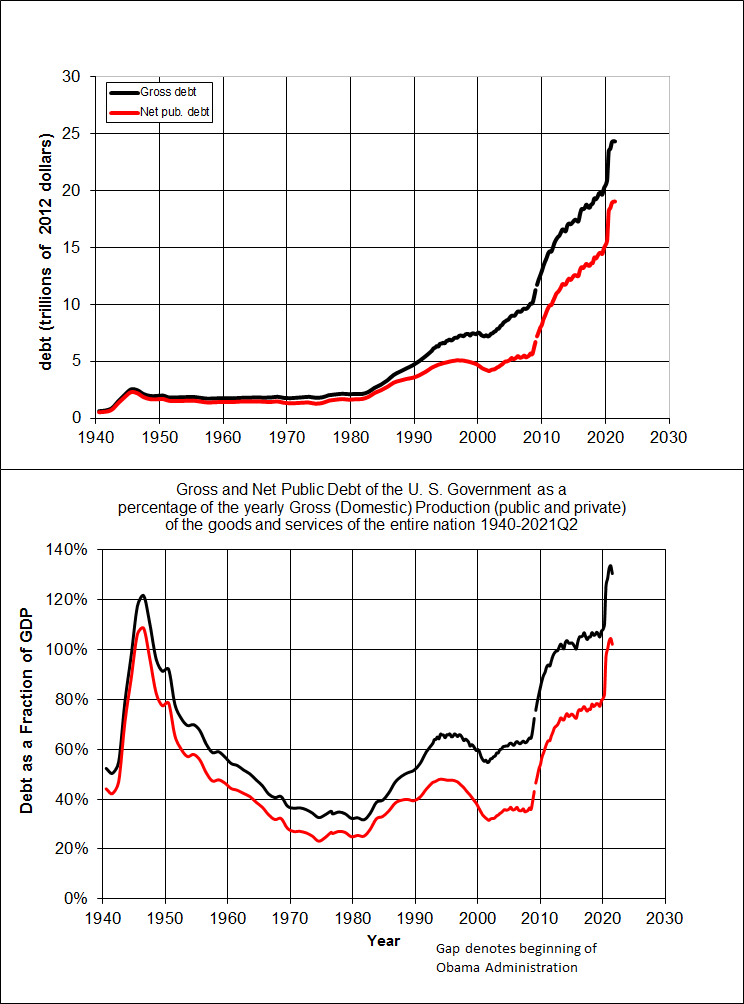
"The Republican alternatives in Congress, mostly just collections of tax cuts, would not have set unemployment on a drastically different course than it is on now." If the smarts of the Obama admin were so wildly inaccurate in their prediction of the impact (or lack thereof) of the stimulus package to unemployment, how can you (or anyone else) so quickly and easily dismiss tax cuts as being wholly ineffective? --- "Even though the recession may be technically over – the government just reported the economy had grown for the first time in nearly a year" Be careful how you interpret those results. Look at the data itself. GDP is the primary measure they're bragging about, part of which is government spending (source). That has certainly gone up over the last months, but does that really indicate a better economy? Also, consider cash for clunkers occurred during that period. Even though that's basically govt paying for half of your car, it all adds to GDP. It's not a sign of a strong economy, it's just a sign that someone is throwing a lot of money in the pot, that someone being govt. And where is the government getting that money to throw? It's printing it, it's borrowing it, from foreign countries (select 'Ownership of Federal Securities'] and from our posterity. But that isn't sustainable. There are many economists predicting that looking back at 2009-2010 the stimulus will cause the recession to slow, stop, then create a "fake" recovery, followed by another downhill period as the "bump" provided by the stimulus goes away. Now politicians are considering a second stimulus because they believe that if they can keep things afloat long enough, then the private sector will recover on its own by then. How? ... Somehow.

Monday, October 05, 2009

You all know I'm ... how shall I put it, "politically minded" at times.  Well, I'm also against signing up for web newsletters. Most seem to either ...
  • constantly throw ads at me, 
  • send enormous articles at me 4-5 times a day, 
  • simply say nothing but teases of information, 
  • require me to click on a link to get any real information, or
  • all of the above.  
However, I'm a member of a web organization called DownsizeDC.org whose newsletter does none of these things. I hope you'll be interested in what they are proposing as I am. 

I'm asking you to look into this because I'd like your help in compelling Congress to pass two specific pieces of legislation created by DownsizeDC.org:

The Read the Bills Act [http://www.downsizedc.org/etp/campaigns/27]
The One Subject at a Time Act [http://www.downsizedc.org/etp/campaigns/83]

These bills would do exactly what their names suggest . . .

The Read the Bills Act would require that every bill be posted online for 7 days, and more importantly, would require that every member of Congress read every word of every law (enforced by requiring them to sign affidavit) they want to impose on you, BEFORE they vote to enact it.

Congress is routinely ignorant of the laws they pass, but ignorance of the law is no excuse for us, and it shouldn't be allowed for Congress either.

Even when they do know the content of the bills before them, they pass unpopular laws by stuffing them as portion of a larger, more popular one. Would it surprise you to know that the Minimum Wage Increase in 2007 was put in as subsection of an Iraq war spending bill?  Or how about that the REAL ID Act, which requires a national ID card, was passed as a small amendment to the "Emergency, Supplemental Appropriations Act for Defense, the Global War on Terror, and Tsunami Relief?"

The One Subject at a Time Act would prohibit Congress from passing unpopular laws by combining them with popular but unrelated proposals. Every law would have to be voted on as a stand alone measure, and pass or fail on its own merits.

They require no membership fee and though I have donated no money to them yet, I am considering doing so. Their newsletter is also a great source of short (most are shorter than this email), but compelling and informative nuggets. You can sign up for it for free, without a membership by going here: http://www.downsizedc.org/page/newsletter and entering your email address.

Should you chose, you can sign up for a free membership with DownsizeDC.org which will . . .
  • Allow you to promote these bills by sending letters to Congress -- all it takes is a few mouse-clicks and keyboard strokes
  • This can be done in one step and is much easier with Downsize DC than by visiting each Congressional website and posting separately
  • Keep you posted on what Congress is doing through an excellent email newsletter, the Downsizer-Dispatch
  • Enable you to pressure Congress on other issues
  • Make your pressure on Congress more effective by combining it with the efforts of thousands of others
You may not agree with all the stands Downsize DC takes, but unlike a political party or candidate, you can choose which Downsize DC campaigns you want to support.

I hope you'll join me in promoting the Read the Bills Act and the One Subject at a Time Act.

If you do decide to join me in this effort please drop me a line and let me know. 

Thanks for considering this,

RR

Sunday, May 11, 2008

Help Fight Log Rolling (apologies to Lumberjacks)

In my reading about "log-rolling" (the term that describes the legislative bundling I was talking about earlier), I came across DownsizeDC. This site believes that the govt is too large and needs to be slimmed down. As an example (and primary culprit) of this monstrosity, it explains how Congress has lacked to fulfill its responsibilities to the people regarding making laws. Two proposed pieces of legislation that aim help that situation are the 'Write the Laws Act' and the 'Read the Bills Act'.

When this country was founded, they specifically designed Congress to be slow and lethargic. Well, Congress found a way around it by creating these organizations like the FDA, FAA, SEC, etc, etc ad nauseum. Each of these organizations don't just make guidelines, but regulations.

To summarize, the WTLA says that Congress has delegated the creation of laws and regulations to these unelected groups of bureaucrats. Worse even than this is that then these bureaucrats have then granted themselves the authority of prosecutor, judge and jury for those that may break the rules.

Take, for example, the early April grounding of hundreds of American Airlines planes. Well, this wasn't a law enacted by Congress. This was a regulation made by the FAA. And what was the regulation that American Airlines so cavalierly ignored at the risk of peril to their very customers? Well, the FAA says that the cabling in the landing gear must be bundled by zip ties (or equivalent) every 1 inch. Well, in an inspection, they found that American Airlines had the audacity to have gaps of not only 11/8inches, and 11/4inches, but even 11/2inches!!!! *gasp* The gaul!

So the WTLA basically says that an individual or organization can only be held legally liable to laws that Congress makes. Now when I first read about this, I wondered what would happen if we actually enacted something like this. Would businesses suddenly start doing whatever they wanted at the expense of the consumer? Would foods suddenly start containing rats and leading to food poisoning because of the cleanliness standards now lacking teeth to enforce them? Would planes start falling out of the sky because the safety regulations have no muscle? Would we go back to the days before government oversight when "buyer beware" wasn't just because it might cost you a little extra money? The reason I don't believe this is simple: the Internet! Consumer watchdog groups are all over the place and with the advent of the internet, people can now more easily determine which companies are lacking the high quality we expect now. And if for whatever reason, whether lack of money or being greedy capitalist pigs wanting to maximize profit at the expense of quality control, consumers and similar groups can more easily expose bad corporations willing to cut quality corners. Because of this, I believe that if a company gets a reputation for low quality, then they would begin to feel the consequences in revenue. Besides, if Congress determines that it's necessary that the airlines have certain safety regulations since it would be deadly not to, then it could pass the bill that contains those regulations.

This would also possibly free up another pet peeve of mine: licensing EVERYTHING. I can't open a shop in my own home to cut hair if I don't get a certified license from the govt saying ... I don't know, that I'm qualified not to cut someone's ear off I guess (which I probably am not ... thus the reason I don't have that license ... but that's beside the point). I could understand wanting to get a license to prove that I'm GOOD at cutting hair, but requiring it before someone can open such an establishment is just too much for me.

Anyway, the other law, the RTBA says that many of these laws don't even get read by members of Congress. They're put together so quickly and are so massive that they aren't actually read completely. This means that there are things that could potentially get slipped in unbeknownst to those Congresspersons that wouldn't agree to it, but because it doesn't get properly vetted, it slips through and becomes law. So the RTBA says that members of Congress must sign under penalty of perjury that either they read the bill in its entirety or that they were present if/when it was read out loud during a session of Congress. While I'm not sure that the 'reading out loud' part would pass, I do think that the concept of having them sign saying that they actually read it is a good idea. It at least puts the onus on them that they can't claim they didn't know some section was in there.

However, beyond the requirement on Congress to actually read the bills, one of the things that I most like about the RTBA is that it requires that the final version of the bill be made available online 7 days prior to voting it into law. If an amendment is made to a bill, it must again sit for 7 days online before it can be voted into law. (Obviously this could be overridden by a super-majority in an emergency.) I LOVE this idea. It allows govt watchdogs to have the time to really find the questionable appropriations, pork barrel projects, and other seemingly hidden clauses.

For another time, two additional things that I think would help clean up Washington:
  • Term limits
    • Consider perhaps 2, 6 year terms
  • Signed amendments
    • Every amendment, every inserted clause and whatnot, has the name of the legislator who made the motion for the change. This way we can see who wants to add what things.

Friday, May 09, 2008

Legislative Tarballs

Ok, here's a pet peeve of mine: bundling 47 completely different pieces of legislation into one bill. What a cop out!

Take the minimum wage hike that the Democrats pushed through in 2007. The title, Fair Minimum Wage Act of 2007, sounds like a self-contained piece of legislation, right? I mean, it's an entire ACT. However, here's the trick. Both parties in Congress got together and they merge all this stuff into one massive bill called:

U.S. Troop Readiness, Veterans' Care, Katrina Recovery, and Iraq Accountability Appropriations Act, 2007

So this bill, based on just the title, already deals with troops in Iraq, veterans health care, Katrina assistance allocations, and money for Iraq. There (which already seems like somewhat of a lot for one bill). Yet, they weren't done. They decided to include the Fair Minimum Wage Act of 2007 into a single section of the whole bill. Scanning throu
gh the text of the bill I feel that this whole thing is basically just one big "give more money to X program" bill. Which, if spent on US programs would only be questionable. But as I looked a little more closely, I found that there is allocated money for helping Liberia get out of debt, conditions for granting Pakistan an extra $5million, and conditions for possibly considering lowering the amount of money we give to Lebanon. I could go on and on with little questionable allocations, but beyond those questions, the main thing that I wondered was 'Why would they bundle everything in one massive piece of legislation like this? Don't they know that makes it harder to determine what's in the bill?'

Then it hit me. Of course they do. By putting both raising minimum wage (Democrat item) in the same bill as continuing the funding of Iraq (Republican item), they both win. They both look like they've successfully gotten what they wanted. And even better, if someone looks at their voting history and sees that they voted for this bill, they can each point to their own item and say "I voted for this bill because of this item. I believed it was more important than what was wrong with the rest." Not to mention that by making the whole thing so enormous, it's less likely that someone would stumble across some of these inane addendums. This is exactly how all those pork barrel projects get into these bills.

Now I'm not a policy expert, and definitely not a legal mind, but it seems to me it would be a good thing to require that a bill ONLY contains things that have directly to do with the title of the bill; or at least that the items in a bill explicitly have to do with each other. They should not be able to allocate money for a peanut factory in Georgia in the same bill that sets
business reporting requirements. Basically it should be proper parliamentary procedure to challenge a section of a bill that it isn't sufficiently related to the core subject of the bill. This would at least make those that want it in there to get up and defend why they want it included. I think it would be at least entertaining to see Senator Robert Byrd get up their and defend the need for his appropriation of money to the 'Robert L. Byrd Expressway' in the campaign finance reform bill.